
Data artist and UAL Associate Lecturer Tiziana Alocci asked what happens to everything digital systems cannot measure as they optimise for speed, extraction, prediction, and surveillance, arguing that the absence of data often matters more than what gets recorded. Drawing on her projects transforming invisible data — soundscapes, personal testimonies, found online data, electromagnetic fields — into data-driven installations, she explored how alternative data collection methods can challenge dominant technological narratives and surface what contemporary systems routinely overlook, turning seen and unseen data alike into something tangible and perceivable.
Past Events
A growing archive of talks, workshops, performances, screenings, and experimental gatherings hosted by the Phreaking Collective across BitRot and Does Cloud Compute (ever) Precipitate?.
Talks
10 Events
Marcus Round moved between magic trick, technical demonstration, and personal essay to ask what we mean when we say "I" — in a sentence, in a chatbot, in a body, in grief. Expanded from a shorter work first presented with tiat at the Internet Archive, the lecture searched for the human voice in a world of endlessly generated language, guiding the audience through a group tarot card game session to explore chatbot sentience, meaning-making, and grief.
Atay Ilgun, a London-based artist, creative technologist, and curator whose work bridges AI, web3, event curation, and experimental art, drew on his practice across early AI, crypto, and protocol art to think through cultural time and the hype cycle, using the spiral as a form that reads emergence and obsolescence together. He proposed network and protocol art as work that operates from inside its own infrastructure, holding its prior states forward as material rather than breaking from market-dependent digital culture — a reality hack from within it. The talk moved through Otherness and the ./spiral exhibition, co-curated with jonooo on SuperRare, alongside soft world, his curatorial studio for protocol art, examining hypercycles, crypto, and alternative paths toward a quieter, more durable version of what digital culture could still become.
Yunzhi Melissa Li, a Chengdu-born, London-based computational artist whose practice spans interactive installations, web-based experiments, and immersive 3D environments, delivered a 30-minute narrated performance lecture navigating a custom-built 3D world. Through it, she explored how urban architecture from 1990s post-Soviet Georgia and digital platforms from the 2000s meet identity formation and social needs, examining how images, code, and audience interaction shape memory and place.
Olivia Ema, a lecturer at University of the Arts London, digital artist, and founder of a creative technology studio, spoke as a Black woman working in creative technology about how identity and intuition shape the systems and worlds she builds. She walked through how digital systems built in software like Touchdesigner could hold presence, respond to a room, and shift something in people almost without them noticing, drawing on her own projects — an interactive floor installation reflecting on grief, and large-scale installations across London from Outernet to Piccadilly. The talk moved through both the technical process behind the work and what was actually driving it underneath, staying grounded in theory and critical awareness throughout.
A flâneur's guide to mapping the new geographies of connection, exploring internet and communications infrastructures, physical and digital topographies, and contemporary data emissions.
A talk showing how practices that treat AI as a material rather than a tool or creative agent allow artists to make critical works presenting new ways of understanding unfathomably complex computational systems.
A web-based performance exploring climate modelling through digital aesthetics and architectural thinking. Moving between early numerical forecasting and contemporary synthetic intelligence, Counter-Modelling challenged the aesthetics of computational realism, presenting climate prediction as a site of tension between technological development and climate futures.
BitRot / 2025
A lecture exploring the making of XXX Machina, tracing its development across philosophy, technical process, and lived experience, discussing artificial intimacies, eroticism, and digital embodiment.
BitRot / 2025
A lecture exploring how desire functions as a mechanism of discipline and ideological capture within the contemporary digital landscape, drawing from media theory, philosophy, and digital folklore, with a close reading of Videodrome.
Workshops
11 Events
Focused on hyperlinks and HTML, this beginner-friendly workshop by Cranberry Lemonade built toward a collaborative network of websites, with participants creating individualistic, poetic pages that reintroduced them to the playfulness of the early web.
Daniel Arves took participants into the software guts of their own machines, installing and playing with Syntə, a live coding language for sound, to make music directly from the command line rather than from notes. Daniel, who helps run events and performances as part of the local live coding scene, brought his enthusiasm for the practice into a session about taking over your machine and making sound from the inside out.
Kat Macdonald, a London-based sound and performance artist exploring collective practice, desire, and public space through technology and performance, led participants through the history of ringtone customization and the politics of sound in the commons. Using RTTTL, the Ring Tone Text Transfer Language developed by Nokia in 1996 to make and share ringtones between early mobile phones, participants made and shared their own custom ringtones, centering ideas around the politics of sound in public space.
Sophie Nadel led a hands-on workshop teaching participants how to translate an address, password, or secret phrase into a hidden code and embroider it onto their belongings, drawing on her design system supported by the Data Reclamation Handbook. The practice encouraged storing information offline, away from prying data collection, while offering a slow, meditative approach to data sovereignty that recentred embroidery as a craft historically dismissed as "women's work." Participants brought their own items to embroider, with needles, scissors, and materials provided.
Ameer Ali and Ericka Simon, founders of LiBi, led this hands-on workshop using their browser-based worldbuilding engine to explore its potential for creating sovereign 3D spaces. Participants worked at a personal scale, using their own assets or ready-made models to shape rooms and small landscapes and personalise them with lighting, atmosphere, audio, and detail, framing worldbuilding as an act of resistance against corporate platforms and surveillance. By the end of the session, participants had a standalone 3D world shareable through the web, alongside foundational skills for building interactive experiences going forward.
A workshop exploring Cables.gl, a free open-source node-based live coding tool for WebGL development, covering live video manipulation, interactive visuals, and input devices including MIDI and webcams.
A workshop covering file formats, permacomputing, bytebeats, generative image-making, and Unicode-art, introduced through speculative art projects and computer science fundamentals.
A hands-on, beginner-friendly personal web-making workshop exploring HTML, CSS and JavaScript to create personalised and poetic webpages and tell digital stories.
A workshop exploring technology as it relates to collective sound making, tracing London's experimental collective performance scene of the 1970s and how those methods apply to current art culture.
BitRot / 2025
A two-hour workshop treating everyday objects as narrative anchors bridging physical material to virtual, inspired by methods from Melissa Li Yunzhi's project Home is a Dwelling Path.
BitRot / 2025
A hands-on workshop reviving dead pages from Glitch.com's shutdown, reverse-engineering lost websites from thumbnail previews and rebuilding them from scratch using HTML, CSS and JavaScript.
Performances
9 Events
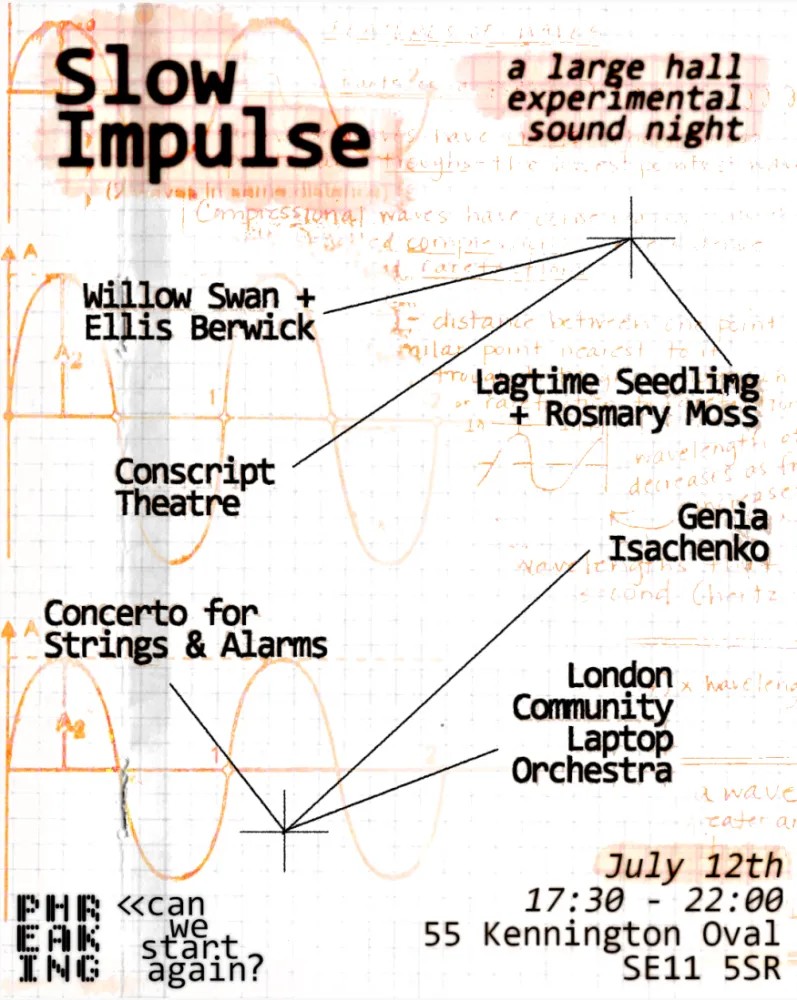
A six act experimental performance night delving into sounds from unusual sources, emanating throughout a large school hall to close off our festival <<Can We Start Again?
↗View 6 performances
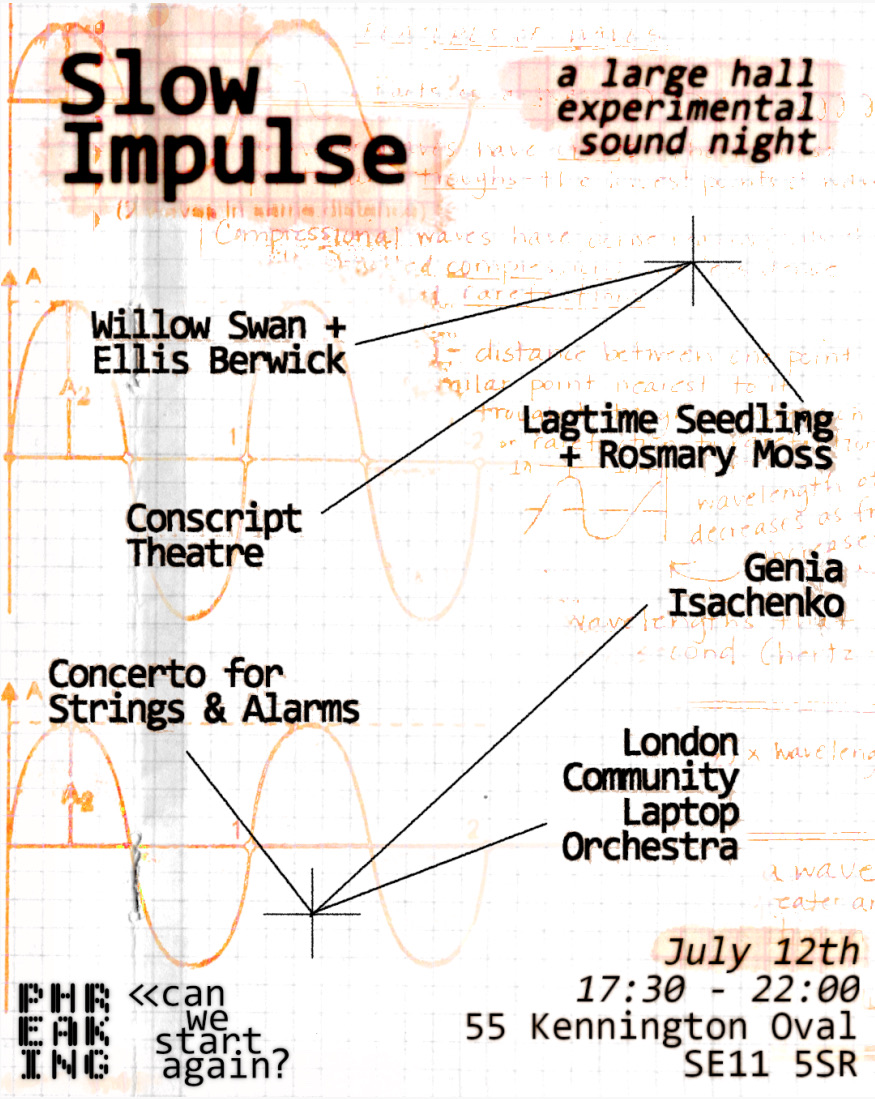
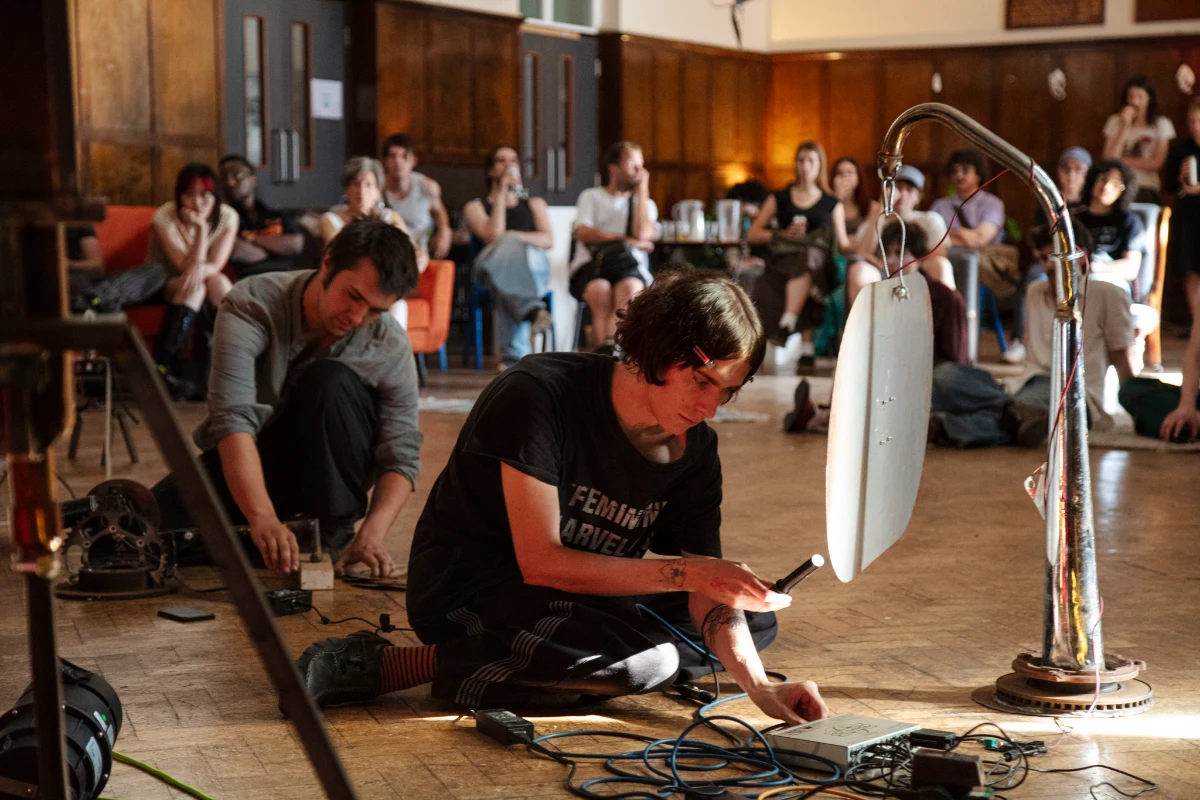
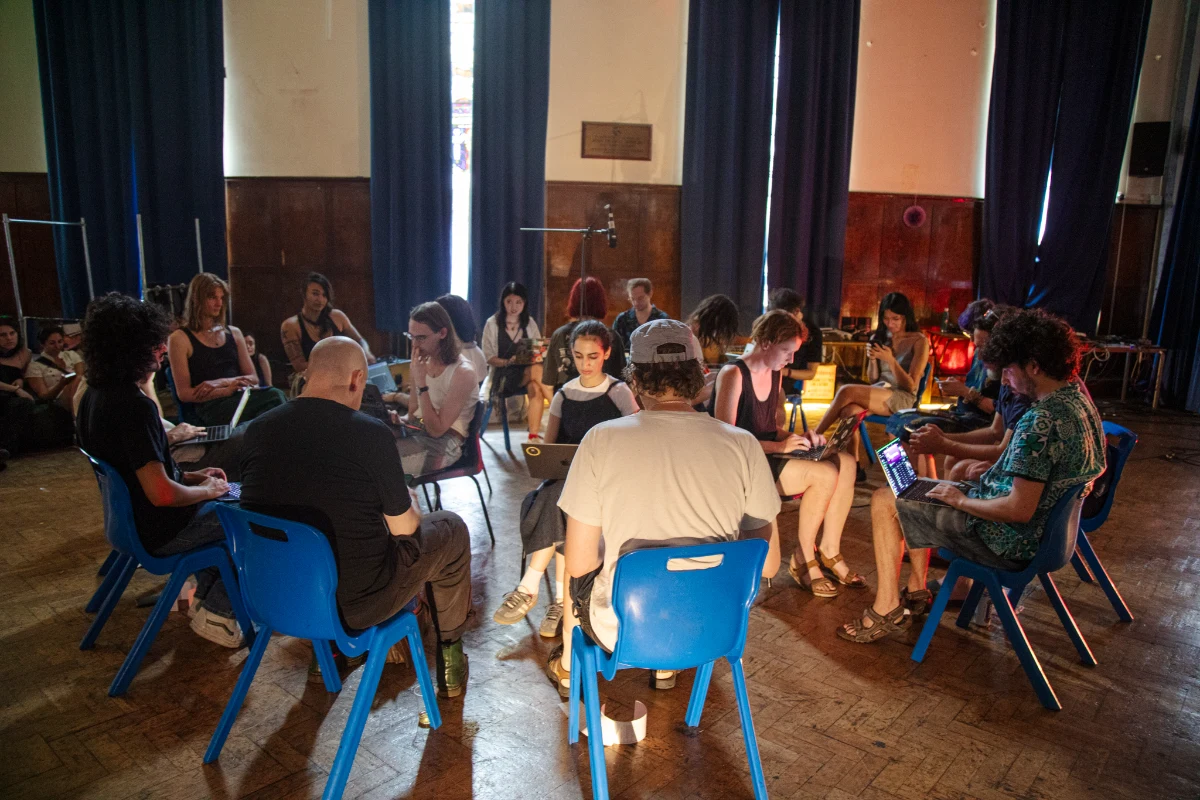
Slow Impulse, an experimental sound night, was the final closing event of our festival Can We Start Again? and moved through six sets that each pulled sound from unexpected places. Ellis Berwick and Willow Swan opened with their sculptural, industrial instruments, setting a tone that was as much about materials as music. The London Community Laptop Orchestra followed, creating a communal space within the stage for people to play and interact with their laptops and phones before settling into a slower stretch of harmonizing healing frequencies. Genia Isachenko then took over with a rig of amplifiers, speakers and an old radio, weaving vocals through static and interference. Lagtime Seedling and Rosemary Moss played a double youtube duet across two projectors on either side of the large school hall. Conscript Theatre's Elia Fielden and Emile Belli reworked fragments of 'Untitled Robot Story,' folding writing about military machinery, memory and love into sound. Finally, the night closed with a full concerto of phones and alarms, guitars, cello and piano alongside ringtones and clocks.
Performance 1
Willow Swan + Ellis Berwick
Willow Swan and Ellis Berwick are an artist duo working across sound, sculpture, and performance. Rooted in a shared interest in repurposing industrial materials into improvised instruments, their collaborative practice transforms functional structures into resonant, site-responsive sonic forms.
Performance 2
The London Community Laptop Orchestra
The London community laptop orchestra is a community run laptop orchestra making sounds in a variety of unusual places.
Performance 3
Genia Isachenko
Genia Isachenko is a sound artist and vocalist working with obsolete tech and experimental performance. Presenting a live surround set using discarded amplifiers and speakers to create their own diffusion array, and exploring the timbral differences of radio, interference and voice through song.
Performance 4
Lagtime Seedling + Rosemary Moss
Lagtime Seedling creates audio-visual compositions on their laptop using live web browser windows and overlapping youtube video tabs, while Rosemary Moss draws from their musical background to create intimate sound worlds to deconstruct and index experience. While they independently approach sound in different ways, through collaboration, they settle in a new and unexplored in-between zone.
Performance 5
Elia Fielden & Emile Belli // Conscript Theatre
Conscript Theatre is a hyper-material performance company bringing creative technology onstage alongside new writing, experimental performance, and alternative dramaturgy. For this performance, sound artists Elia Fielden and Emile Belli present fragments from Conscript's new show, 'Untitled Robot Story', a piece about robotic military machinery, memory, and love.
Performance 6
A Concerto for Strings & Alarms
“Concerto for Strings & Alarms” is a musical concerto composed and played for a variety of alarms and ringtones, featuring two guitarists, a cellist, a pianist, alongside phones, clocks, and interference.
A live coding performance by the live coding group That Sounds Exciting!
A performance by Claire McMichael at Phreaking Collective's Does Cloud Compute (ever) Precipitate? exhibition, London, 2026.
From the artist: "This performance experimented with livecoding audio, using FM synthesis, modulating sinewaves and sawtooth waves. I used euclidean rhythms which created clashes and unfamiliar patterns in the sound. Sampling pop-cultural references and internet one-liners behave as my vocals for my sound usually. The livecoding of the audio and visuals is done through Strudel.cc, this performance mixed ambient sound and noise together. Usually, I look to my livecoding peers for reference, sometimes remixing their code, I am a fan of open-source and community knowledge sharing."
Lagtime Seedling scores and performs audio-visual compositions made entirely within web browser windows using a large number of live youtube.com video tabs. Through a meticulously choreographed way of using their laptop, they create narrative and musical journeys through strange and overlooked corners of the web. Transparency and accessibility is central to their practice: Lagtime Seedling doesn't use any traditional music software. Instead, all their sound comes from youtube tabs and a piano keyboard on a separate virtualpiano.net browser window. They interact with their browser as anyone could, using keyboard shortcuts to navigate many tabs and windows quickly, and interact with videos through youtube's default hotkeys. The sound and visuals of lagtime's compositions, being pulled straight from youtube, carry on a certain algorithmic qualia. Full of ASMR, slime squishing, nail scratching, and soft spoken words, their compositions reflect the overstimulating experience of being online. Through a carefully arranged score, lagtime recontextualises online content, extracting overlooked emotion embedded within it.
Live coders from Algorave London, featuring Sinsé (@ladysinsemilla), Nadezhda (@nadyaviaproxy), and Daniel (@algorave_london), performing algorithmic and generative music.
BitRot / 2025
A live performance using a custom-built modular synthesizer.
BitRot / 2025
A live browser window performance by Lagtime Seedling who uses youtube video tabs, an online piano, and overlapping browser windows to create narrative audio-visual compositions. This set involved a more improvised approach to their otherwise heavily choreographed process as they browsed the web and played piano melodies live on stage.
BitRot / 2025
A live coding performance integrating real-time audio-visual systems, algorithmic composition, AI-driven generative visuals, and sensor-based interactivity.
Screenings
3 Events
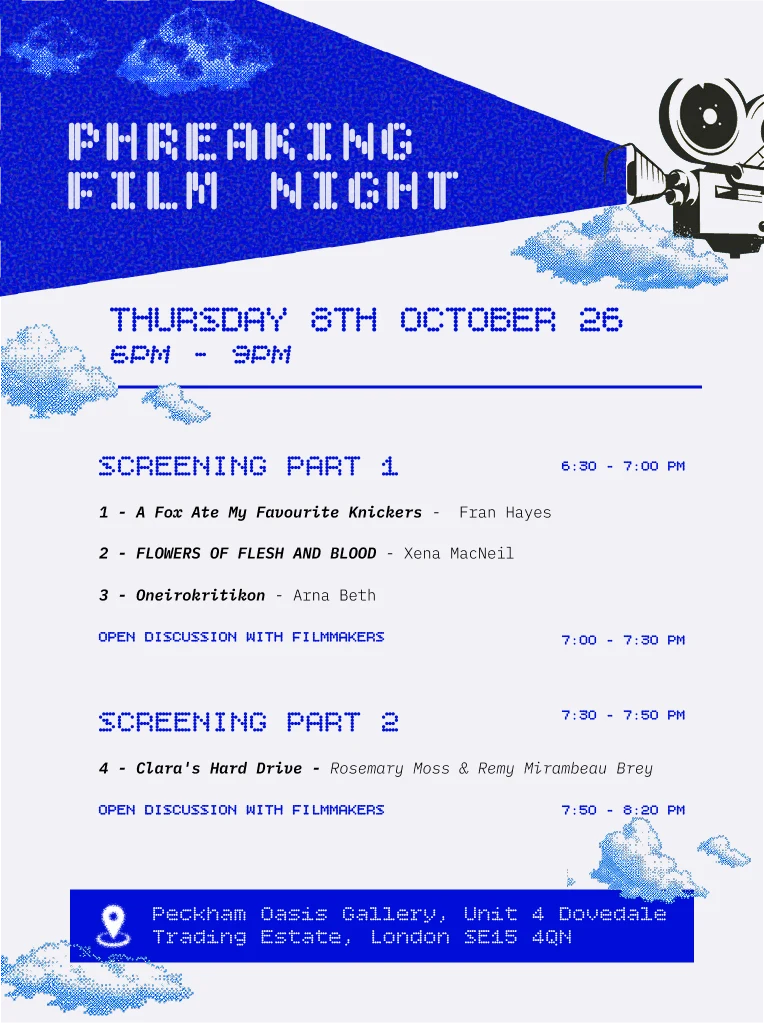
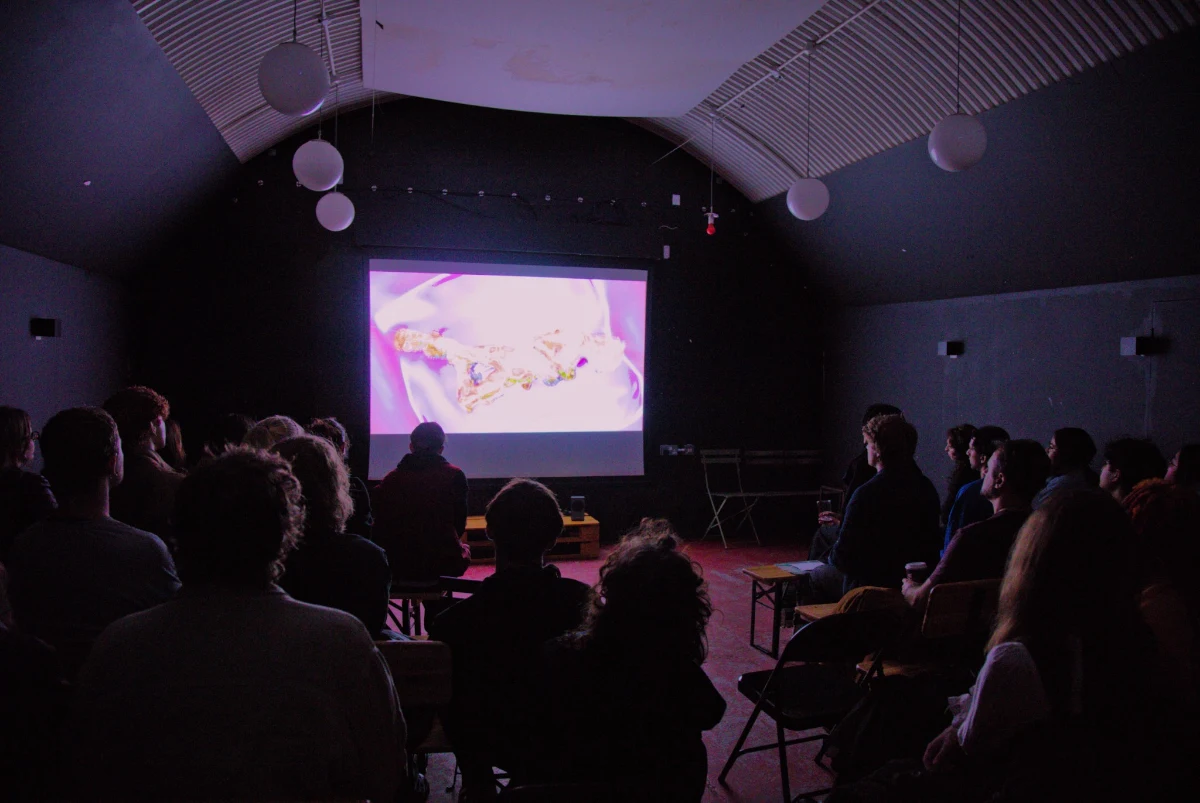
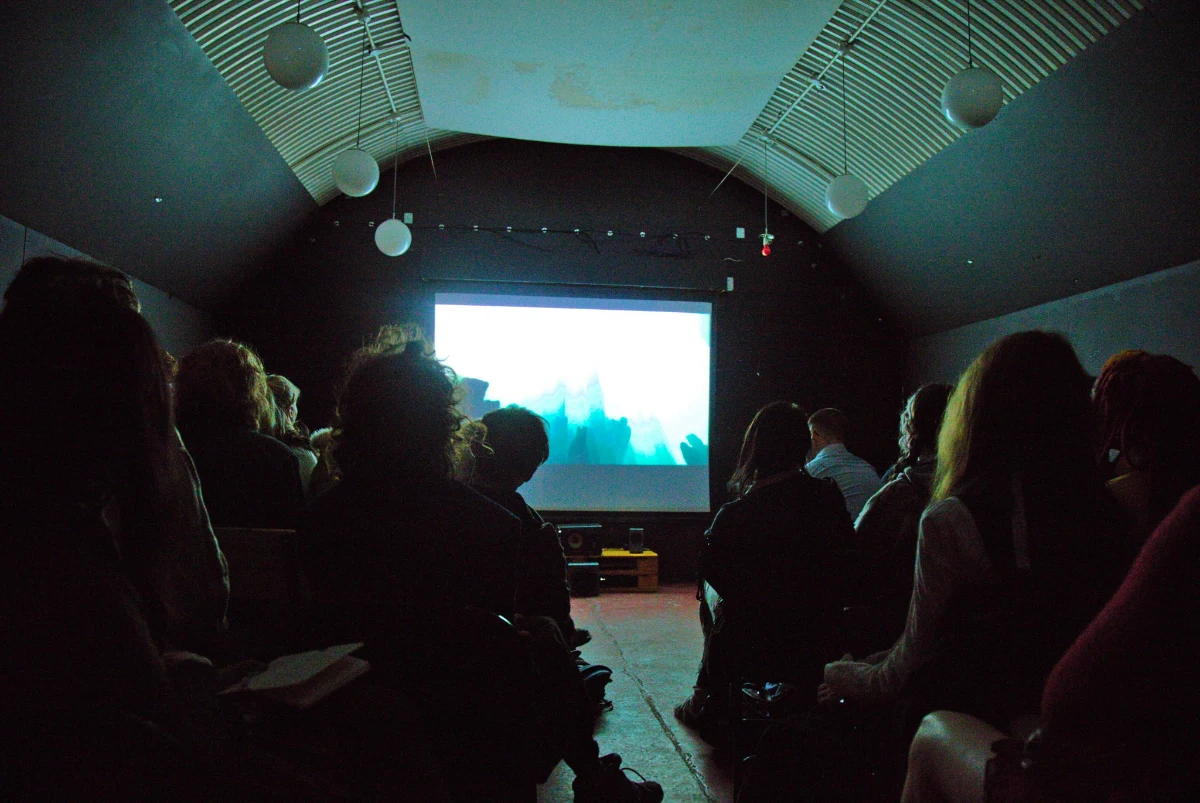
FIlm night of computational films in Peckham Oasis
↗View 5 films
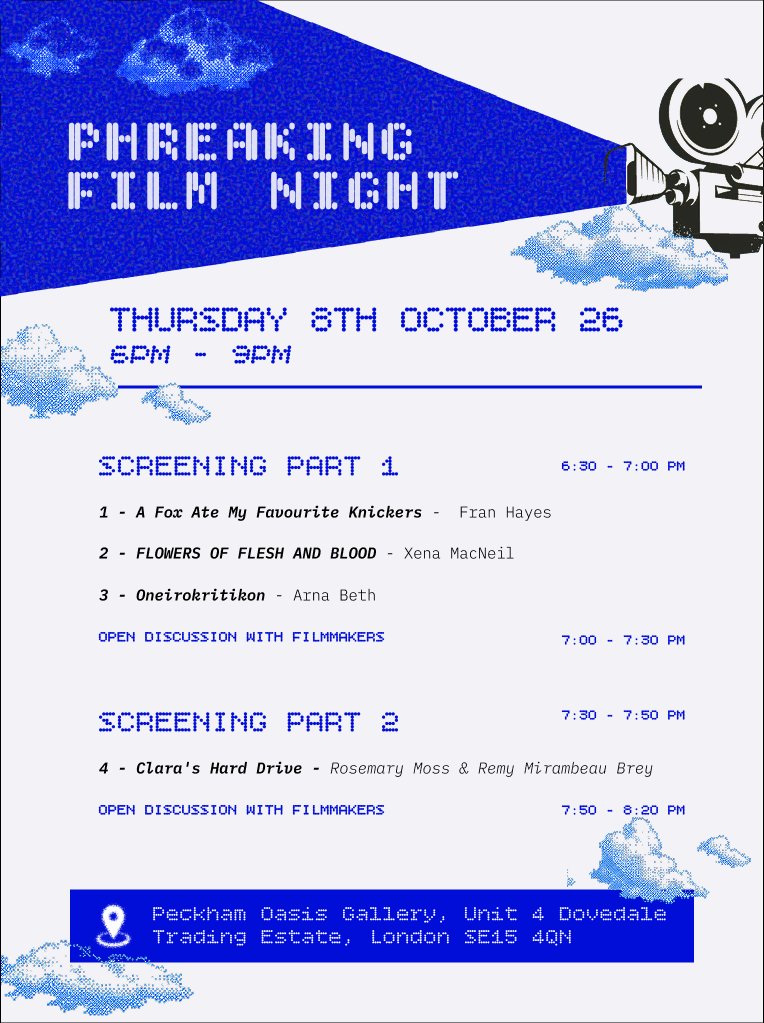
The Phreaking Collective is collaborating with Peckham Oasis to host a curated night of computational art films in their brand-new screening space. The night celebrates independent filmmakers across London working with new forms of storytelling, production, and technology. From the data-scare future of precious and passed-down storage devices in Clara’s Harddrive, to intergalactic dreamgivers in Oneirokritikon, to an alien bacteria crossing a neverending landscape in A Fox Ate My Favourite Knickers, and a ballet of necromancy, birth, and transformation in Flowers of Flesh and Blood, each film creates a unique world that both reflects and dulls our contemporary reality.
Film 1
A Fox Ate My Favourite Knickers
Fran Hayes
An alien bacteria traverses across an even more alien landscape; a 3d scan of the artist's naked body, covered in computationally grown lichen and scattered with the letters from the poem that exists within the soundscape. The text takes inspiration from a recurrent interaction with a local neighbourhood fox who has taken a liking to the human residents' favourite garments. The interactions collapse the space between them - fox and human - decimating imagined hierarchies. It considers the overlaps between their intimate ecologies and of the deep networks that entangle all things. Written, directed & animated by Fran Hayes Music and sound design by Fran Hayes & ALEXANDER ALIEN
Film 2
Oneirokritikon
Arna Beth
Oneirokritikon is a non-linear research film exploring interstellar communication through the lens of Astrobiology’s theorized "Dreamgivers". Entities transmitting realities across galaxies via human sleep. Rooted in the ancient practice of dream interpretation (oneiromancy).
Film 3
FLOWERS OF FLESH AND BLOOD
Xena MacNeil
Flowers of Flesh and Blood is a ballet-inspired digital folk horror film, using unreal engine and motion capture technology to bring to life a simulated ritual involving the summoning of a Goddess, necromancy, birth, sacrifice, decay, cannibalism, and transformation. Drawing upon the folklore of fertility rites and rituals from the ancient pagan world, Flowers of Flesh and Blood seeks to realign the human ego with the cosmos by reminding us of the ecstasy and also the agony of renewal. It is a return to dionysian decadence; a descent into ritualism hysteria that highlights nature in all of her ambivalence, exposing the ouroboric cycle of life and death that we are all swallowed by.
Film 4
Talk With Filmmakers
Xena MacNeil, Arna Beth (Fran Hayes)
A conversation with filmmakers Xena MacNeil, Arna Beth about game engines, world making and insperations. Fran Hayes joined in a pre recorded Video
Film 5
Clara’s Hard Drive
Rosemary Moss and Remi Mirambeau
The film is set in a vague future: a parallel reality in which most of the world's data centres have been closed by international agreement to address wasteful energy practices. Digital infrastructure persists, but is operated locally, upheld by universal technical literacy, a culture of mending and repair, and community-run internet hotspots. With cloud storage curtailed and portable hard drives no longer manufactured, all that remains to store precious memories are drives already in circulation. Each time a drive changes hands, its previous owner writes a ReadMe.txt specifying what should be kept and deleted, a ceremony known as the "Hand to Hand," overseen by trusted community members called Hard Drive Swimmers. The film follows three characters, Sofía, Nikos and Charles, as they confront a drive left behind with vague instructions. Clara's Hard Drive is the clearest expression of Rosemary and Remy’s collaborative practice to date: an experimental moving image and multimedia project developed over the past two years, most recently selected for London Short Film Festival 2026 and screened at the ICA. This screening was followed by a open discussion around the world of the film.
Film night of Computational Arts Film, Moving Image and 4D work.
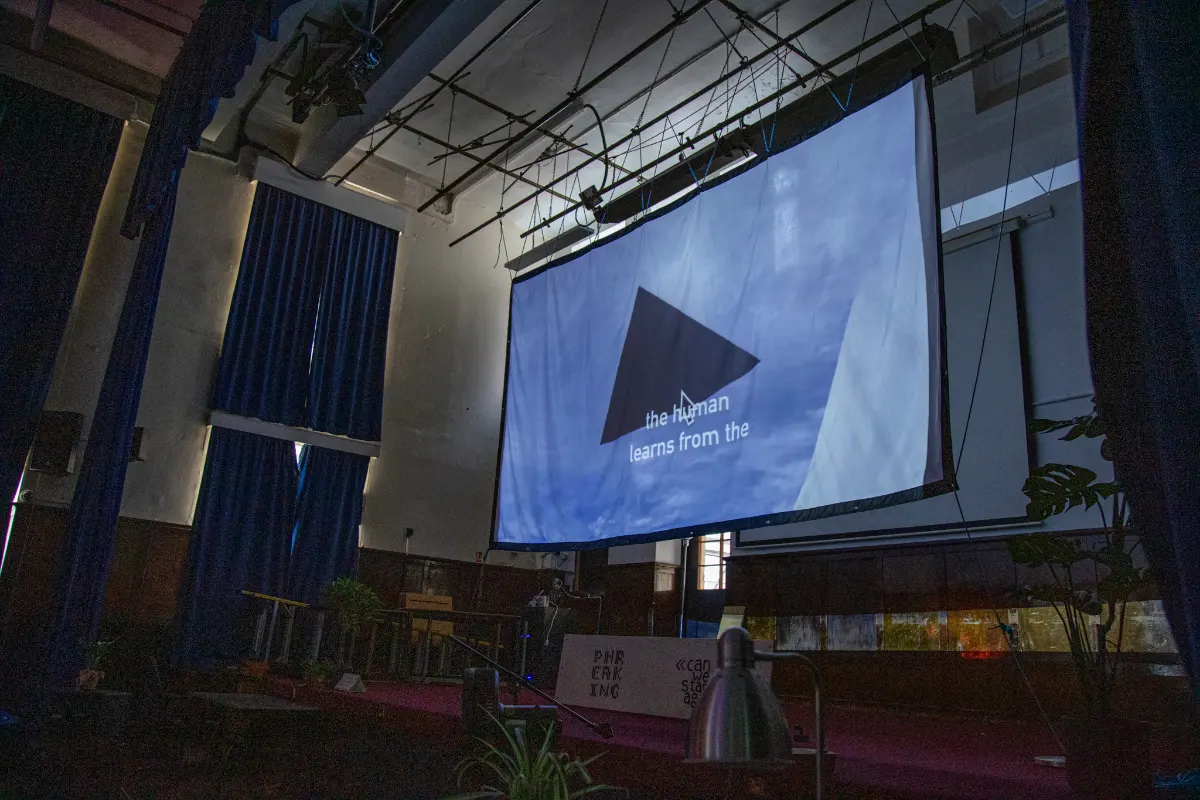
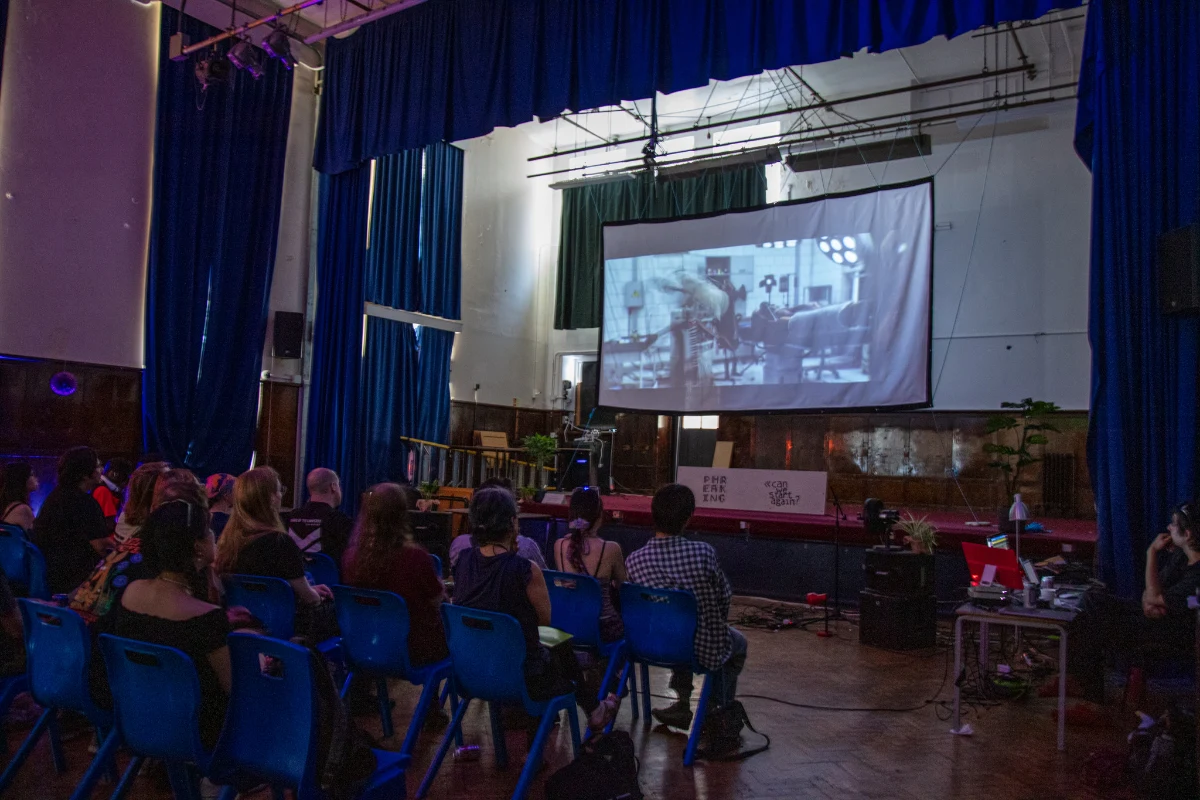
↗View 14 films
Film night of Computational Arts Film, Moving Image and 4D work.
Film 1
and honestly, that’s amazing
Charlie R
‘and honestly, that’s amazing’ is an excerpt from an original text, read by an artificially generated voice and paired with visuals of data centres taken from Google Maps. It examines the distinctive phrases and language patterns used by Large Language Models and asks viewers to consider how artificial intelligence is actively reshaping how we use and interpret language in contemporary society.
Film 2
Death Of Fles
Zechen Huang
A body is found torn apart. Three enigmatic witnesses recount fragmented memories of its soul, their testimonies unraveling a surreal trial where reality dissolves into nightmare, each note deepening the descent into darkness. This is a story about the death of Fles.
Film 3
THE CLOG (i am constantly pulling a crocheted 3d model of spaghetti out of my stomach)
Fran Hayes
The work is a response to an unnamable feeling. A blockage that compresses me emotionally and creatively. During my time on residency at Studio Kura, Japan, I noticed an easing of this blockage, a slow transition that accelerated through my lived experiences in and around Itoshima. Through absorbing aspects of the landscape, from water chestnut seed pods found washed up on the beach, to intricate and intimate architectural details, I discovered a means to channel the uncomfortability that has been lodging inside me. The text work is a direct response to this feeling, I am processing, reflecting. I pair this with the visuals, a more indirect representation of this internal unease where I loosely play with bodily and organic forms contrasted against the harsher textures of the external world. The slippy tendril ties it all together, it seems never ending; incessant. It is tangled up with fragments of stuff, sometimes offering glimpses of the recognisable, often not. And yet the stillness of it suggests a calming presence; for humankind is complicated, and sometimes it is the things that restrict us that make us most comfortable. THE CLOG confronts the dizzying velocity of late (techno)capitalism—our habit of retreating into manufactured busyness just to feel a sense of momentum. By contrasting this frantic external pace with the work’s quiet weight, the viewer is invited to pause, to step out of the current, to look closer, and to find the stillness in the textures of the immediate world.
Film 4
Wilding
jonathan w. y. gray
A speculative exploration of online media on forest-making and its unanticipated consequences.
Film 5
Being With The Stone
Jenny Jih
Being-with the Stone is a journey of descent: beginning in the collective ecstasy of Stonehenge at the Summer Solstice, where bodies, light, technological devices, and the agency of the sun become entangled, and slowly withdrawing until what remains is skin against the stone surface, and what emerges from that intimacy with matter.
Film 6
An Absence
Chris Turner
A short film based on the poetry of my colleague and friend Mark Prime, who died in 2023. The poem tells of an enforced separation from the simple freedoms of life, and is paired with images of the long-abandoned, now demolished Greenwich District hospital, its ghost resurrected through the use of AI. Read by Anil Aykan of Fragile Self.
Film 7
The Krazy Katalyst
Marcus Stalmanis
Film 8
I Won’t Hold Your Hand
Camila Alfonso
Two video poems: #1 ‘I hate my phone’ and #2 ‘I’m not going to hold your hand when I tell you this’.
Film 9
Tap Tap Tipety Tap
Mrs Luva-Luva
A woman accidentally turns herself into a homogenous lump, which is harvested by Lucky Cat and sold at the LLM supermarket. Through absurdity and bodily transformation, the film reflects on the changing human psyche under algorithmic capitulation, where people become brands, emotions are packaged as content, identities collapse into meme-like simplifications, and data becomes a tradable commodity.
Film 10
Digital Relics
Mollie Tilley
‘D-R’ investigates my underrepresented community and its transformative rites and rituals through a fabulated ‘future archaeologist’ Avatar. The archaeologist coaxes out digital relics using several divination tools: sound, dance, doodle-bugging, and tasseography, all things my grandmother has taught me. Once he has sourced his excavation site, he begins to dig, but what he uncovers are entangled, fated timelines and looping histories that have been seeking him lifetime after lifetime. This body of work reflects on cycles, rebirth, and concurrent timelines, presenting history and memory as continuous processes that do not have a definitive end. In a sense, each project is a rebirth of the one before it, returning in a new body.
Film 11
Transition 002: Home
Peixian Wu
Transition 002: Home is a procedural cinematic work exploring home as both memory and repeated restart. Drawing from autobiographical experiences of migration, relocation, and unstable dwelling, the project translates domestic space into a virtual architecture shaped by repetition, replacement, and regeneration. A singular childhood home, associated with family memory and accumulated time, is placed in contrast with a procedurally generated field of temporary apartment-like units. Adapted from the logic of dungeon generation, these repeating rooms, windows, furniture, and workspaces form a spatial system of departure and return. Rather than reconstructing home realistically, the work asks how computation can hold emotional traces of instability, and whether each new dwelling becomes another attempt to begin again.
Film 12
what could you be
Yewon Jang
There are different lives we could have lived and the possibilities lost through our choices. I made a short animation in which society stages possibilities through the form of free choice, using the metaphor of Dol-jabi. Dol-jabi is a first birthday tradition in Korea in which several symbolic objects are placed in front of a child, and the object they choose is believed to hint at their future. In order to visualise this idea, I developed the project through a response box, body scanning, motion capture, audio visualisation, and other experimental processes.
Film 13
Boots on the Ground
Michael Woodruff
A companion animation to a digital print on show at LACDA (Los Angeles). Based on my digital abstraction and digital graffiti works, I create digital structures on a filmic timeline using media technologies from glitches, noises, blurs, glows and graphic systems as though they were brushstrokes themselves, with a lineage to the 50s abstract expressionists. This piece revolves around a hypothetical LA police call out to graffiti being made across the city.
Film 14
SHATTRD
uoshi
Trapped in endless reboots, a character’s identity dissolves. Using modded and pirated GTA: San Andreas footage alongside glitch interventions and datamoshing, the film turns the videogame space into an experimental essay on obsolescence, performance, and the individual.
An evening of computational, experimental, and artist-led short films bending narrative, fracturing reality, and playing at the edges of code, image, and memory. Featuring films by Lucy Ellis, Autojektor, Atay Ilgun, Maggie Maggot, Erinne Huston, Dana Fox, Shannon Lu, Verona Gryshchuk, Max Colson, Natalie Maximova, Isaac Ward, Tilly Hawkins (Nukleopatra), Ned Caderni, Iman Javaid and Julian Law, Ngo Chun Phoenix Tse, Mati Granica, and Yidi Chen.