Does Cloud
Compute
(ever)
Precipitate?

If clouds in nature condense and return as rain, can the digital cloud ever give back what it takes? Can data come home to the people who made it?

About

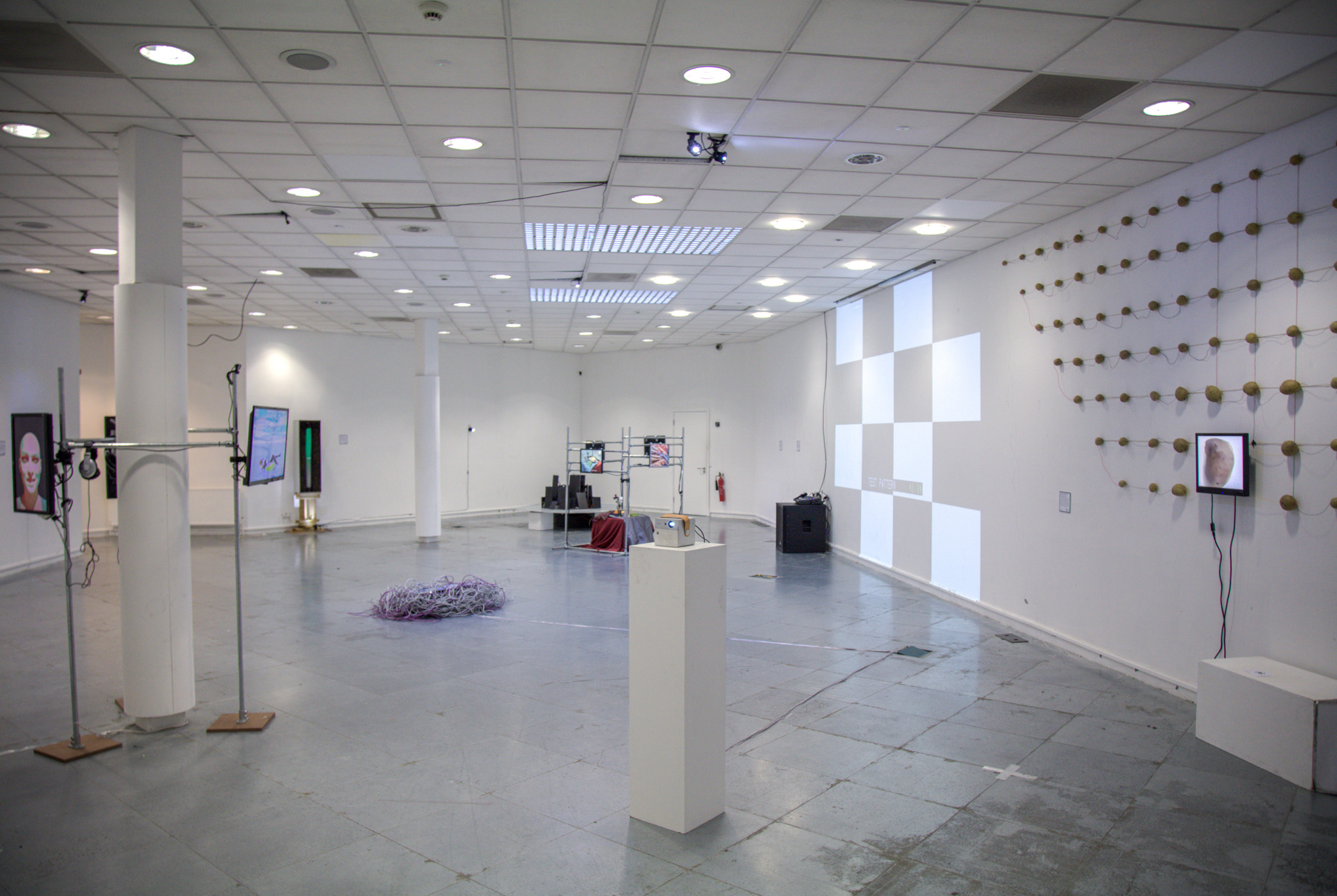
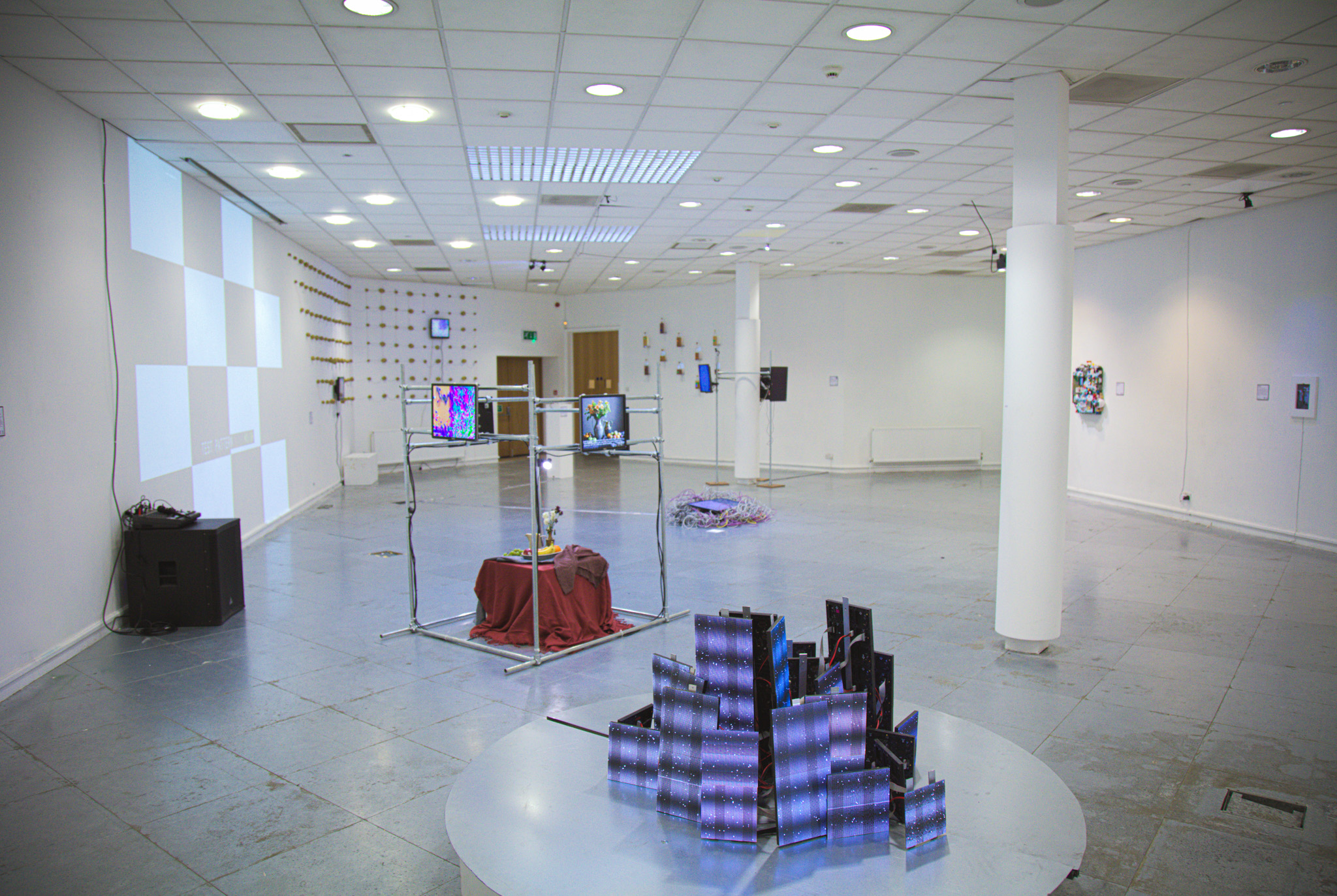
Does Cloud Computer (ever) Precipitate invites the audience to confront the physical infrastructure that supports our digital ecosystems. The systems we interact with daily are built on a vast network of unseen infrastructure: from monumental datacenters and interconnecting cables, to water-guzzling AI factories, all conveniently described as the cloud. In this exhibition, the cloud is made tangible, visible and audible, encouraging audiences to engage with it and their own relationships to the systems behind everyday digital systems.

Running alongside the two week show is a series of talks, workshops, discussions, film screenings and performances where visitors are invited to look deeper into research, theory, and practice for a critical understanding of these unseen systems.

“Why do the clouds keep afloat when everything else drops to the ground? The explanation is simple: the gravity is less than the force of air that sustains the clouds. Clever, don't you think? Yes, but sooner or later they fall in the form of rain. That is my revenge.”
Hour of the Star, Clarice Lispector

Location

ANNEX By the Koppel Project

1 Tiverton Street, London,
SE1 6NT, UK

Dates

Private view:
9th Jan 2026, 18:00 - 21:00

Ran from:
10th - 25th Jan 2026, 10:00 - 17:00

As seen on: The Koppel Project


Artwork

Master in training — Yunzhi / Melissa Li
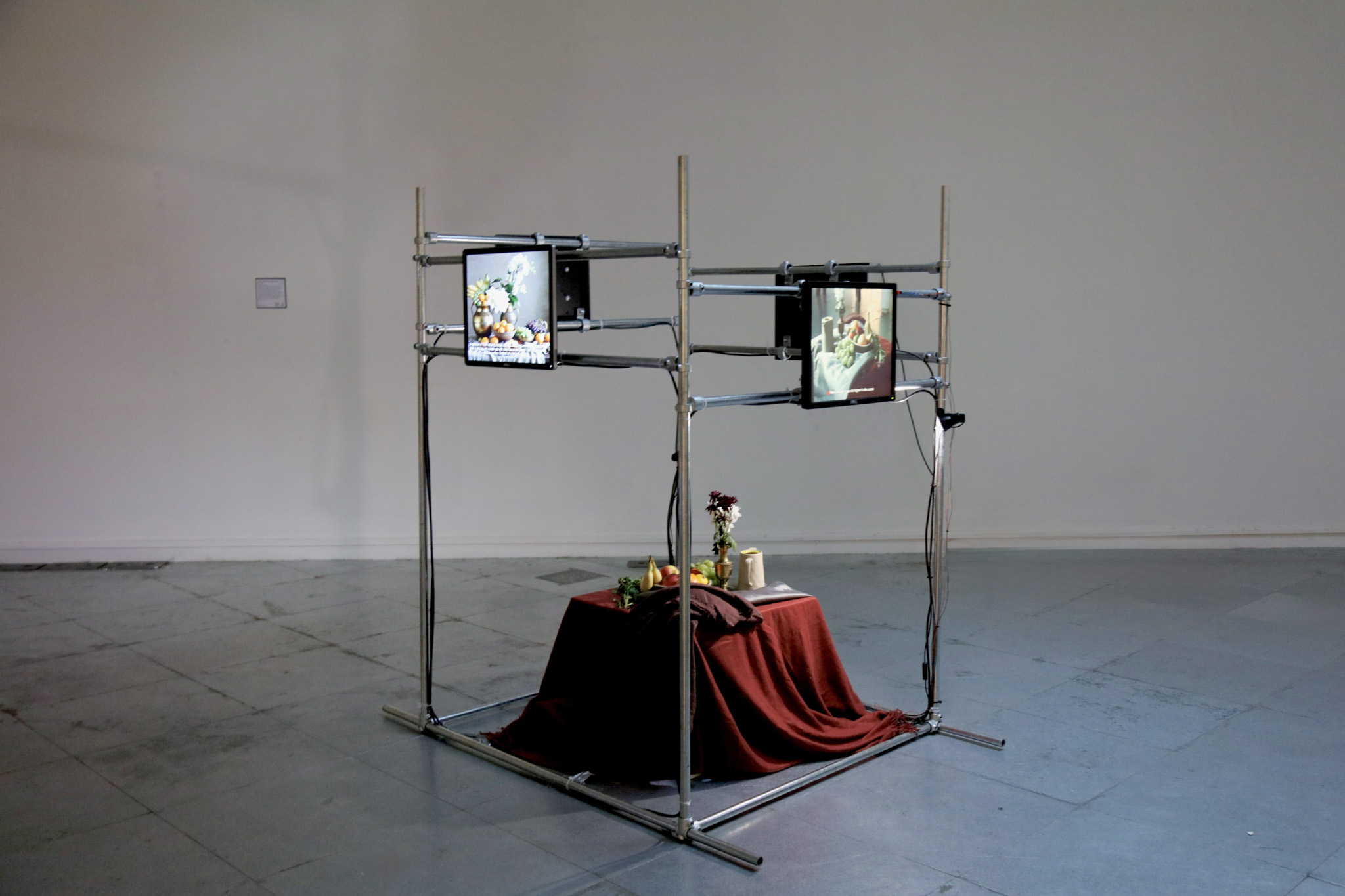
Centring on a physical still life, the artist's traditional gymnasium, this installation exposes the absurdity of generative AI. Triggered by a button, the system captures reality but refuses to see it, replacing the objects with "perfect" statistical fabrications that immediately melt into digital entropy. As the image degrades, the system attempts to make sense of the noise, searching the Flickr archive for human memories that match its own distorted visions.

Master in training (2026) © Yunzhi / Melissa Li
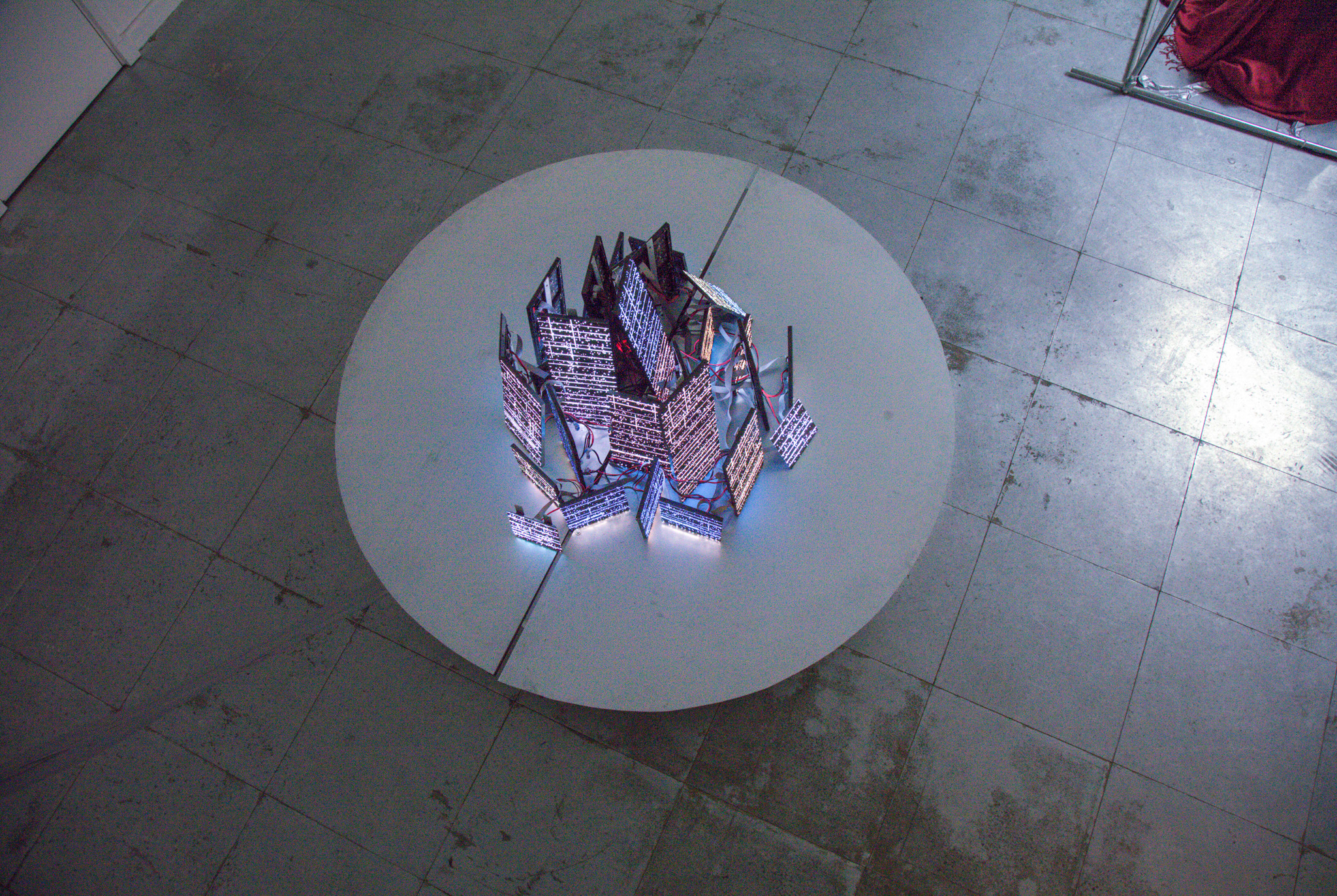
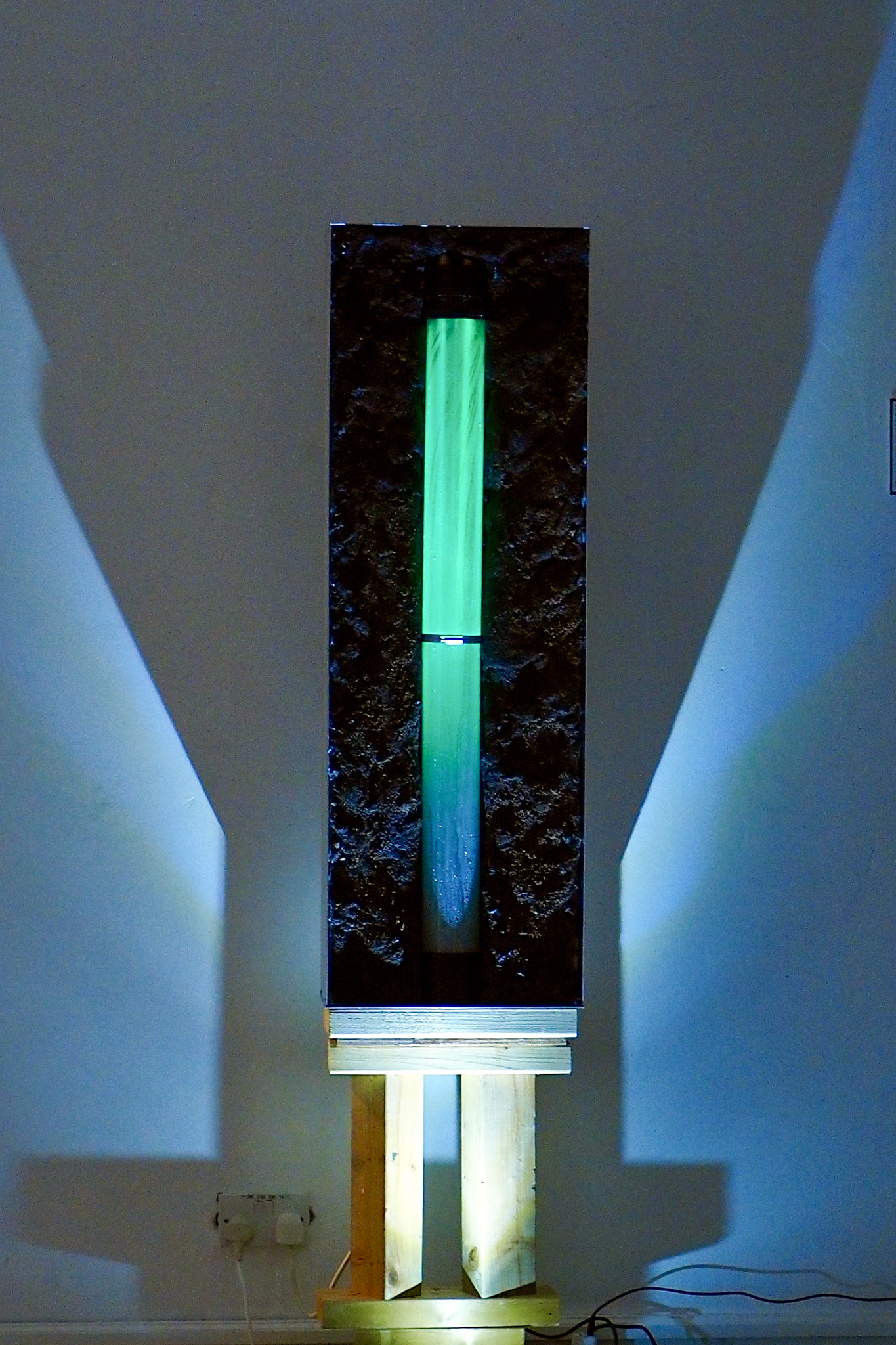
I live there with you — Xach Hill

A poem based sculpture, drawn unease when struggling to remember something, as is often the case, and couldn't, as I had no signal. I had instinctively reached for access to the cloud, with the realisation that all my memories are stored online, on data centres I'll never see, physically owned by someone else is an unnerving feeling of loss. Knowing these memories I struggle to recall, are amalgamating into reasoning models, is there's a fraction of yourself in them? Elements of the poem will creep in but are purposefully obscured instead, focusing on the mental imagery.

I live there with you (2026) © Xach Hill

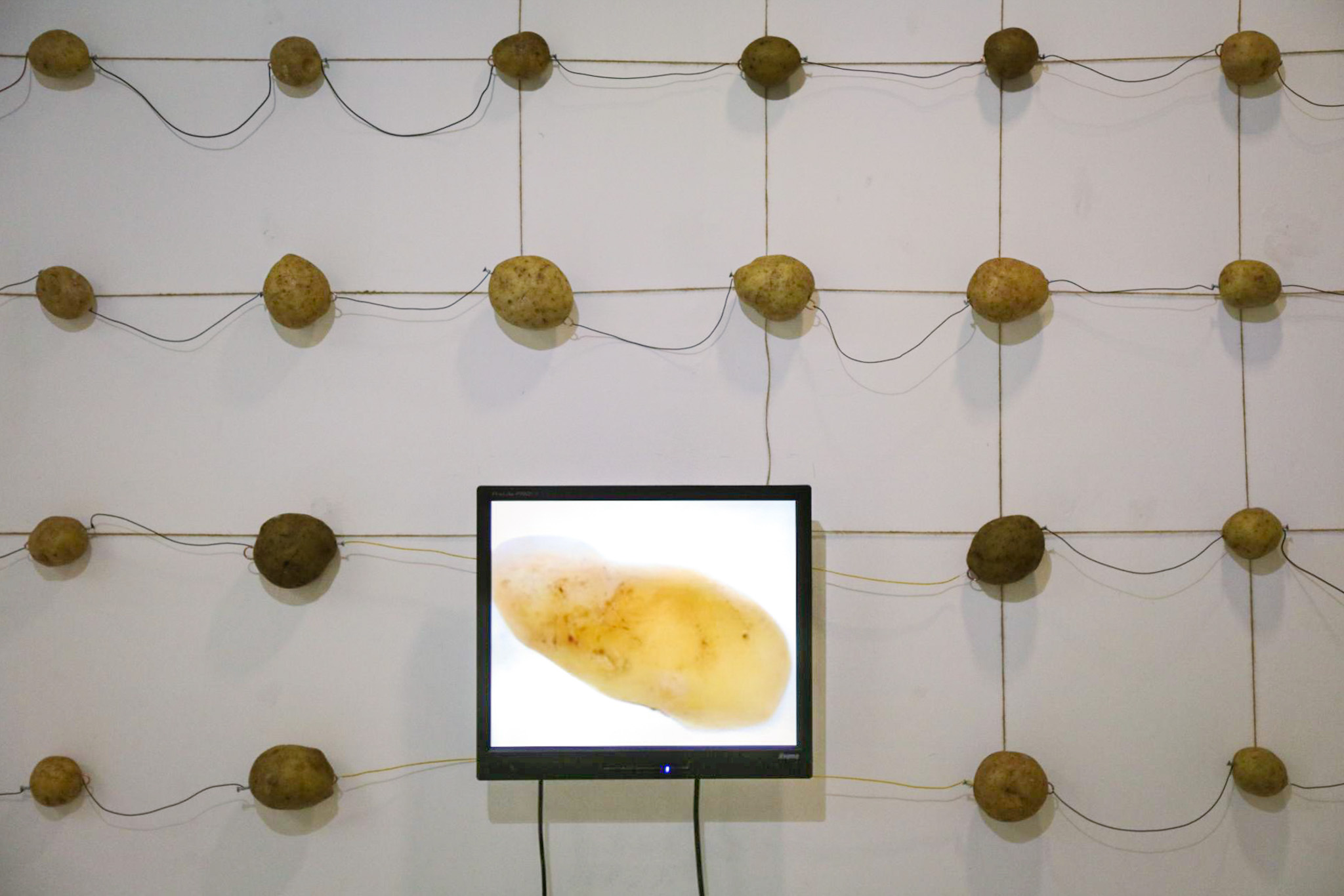
i potato self-portrait — Nikos Antonio Kourous Vázquez

i potato self-portrait is a durational generative portrait of a potato. The fidelity of the portrait is controlled by the health and charge of a large potato battery array. It runs a custom image diffusion model trained on a dataset of 10,117 images of healthy, and diseased potatoes. The voltage of this potato battery controls the health of the generated potatoes. As the potatoes dry up and lose the ability to generate power, so does the health of the potato in the portrait. Eventually, i potato self-portrait will no longer be able to produce an image of a healthy potato.

i potato self-portrait (2026) © Nikos Antonio Kourous Vázquez

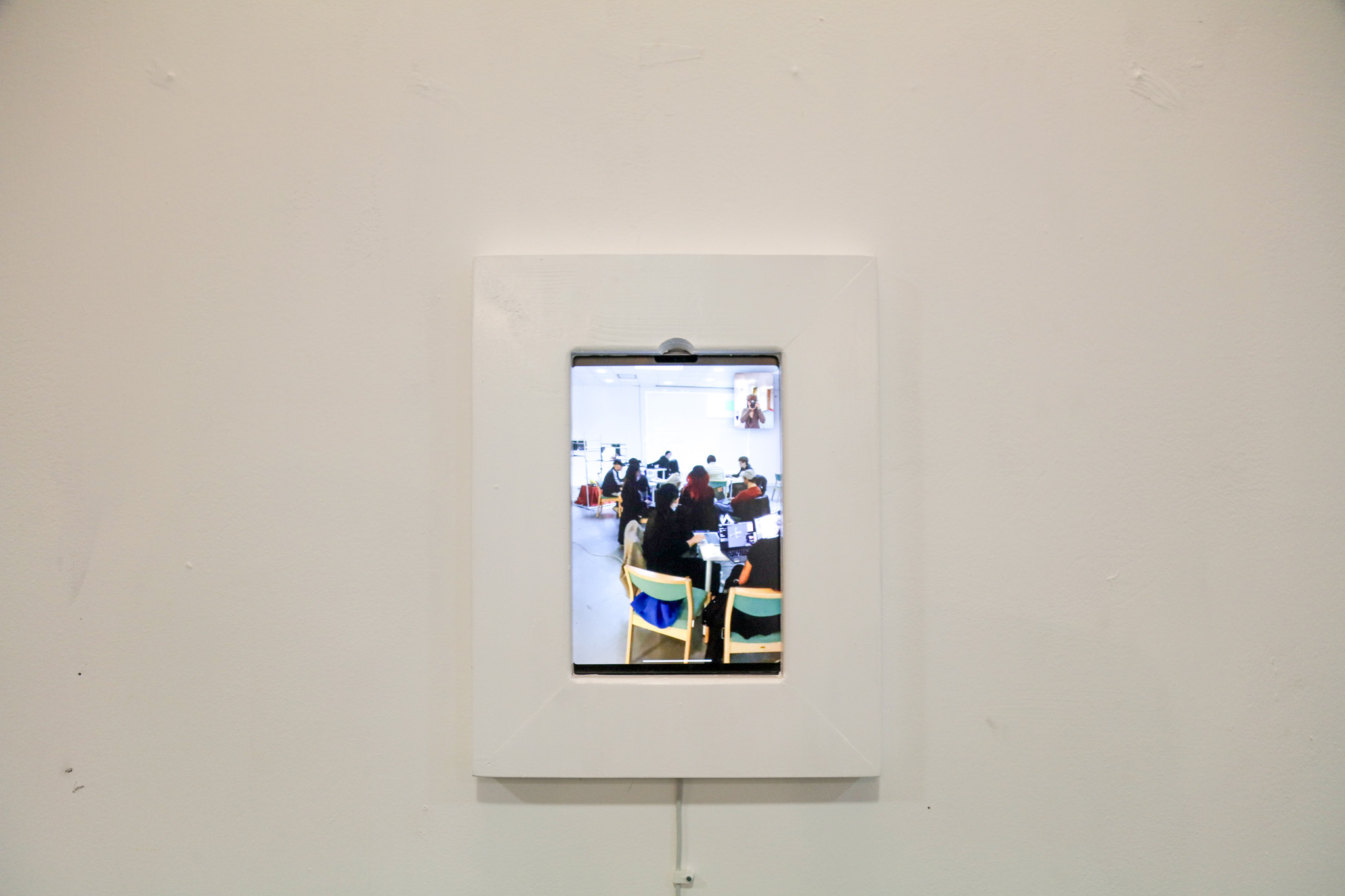
Window — Robin Leverton

Window activates a global architecture to forge a hole through a wall. Utilising Apple's Facetime video call infrastructure, Window employs a connection between two devices spaced 30cm apart made by passing data to the Wifi router, over copper cables to a local exchange, fibre optics to the Internet Service Provider's core network, onto the London Internet Exchange, to Apple Edge Servers in a London datacentre, and all the way back again. In cutting a virtual hole in the wall, Window stretches the interior space of the gallery around a city.

Window (2026) © Robin Leverton

Precipitation Network — Phoenix Isla Kea & Jasmine Broadhurst

Precipitation Network is an installation that materialises network infrastructure through live environmental signals and renders network activity as a dynamic physical condition. The system measures local network activity, including Wi-Fi traffic, device presence and ambient signal activity, and maps these variables to physical outputs such as light, mist, and motion. Viewers and their devices continuously influence the system, modulating its behaviour in real time and foregrounding their participation in normally imperceptible infrastructures.

Precipitation Network (2026) © Phoenix Isla Kea & Jasmine Broadhurst

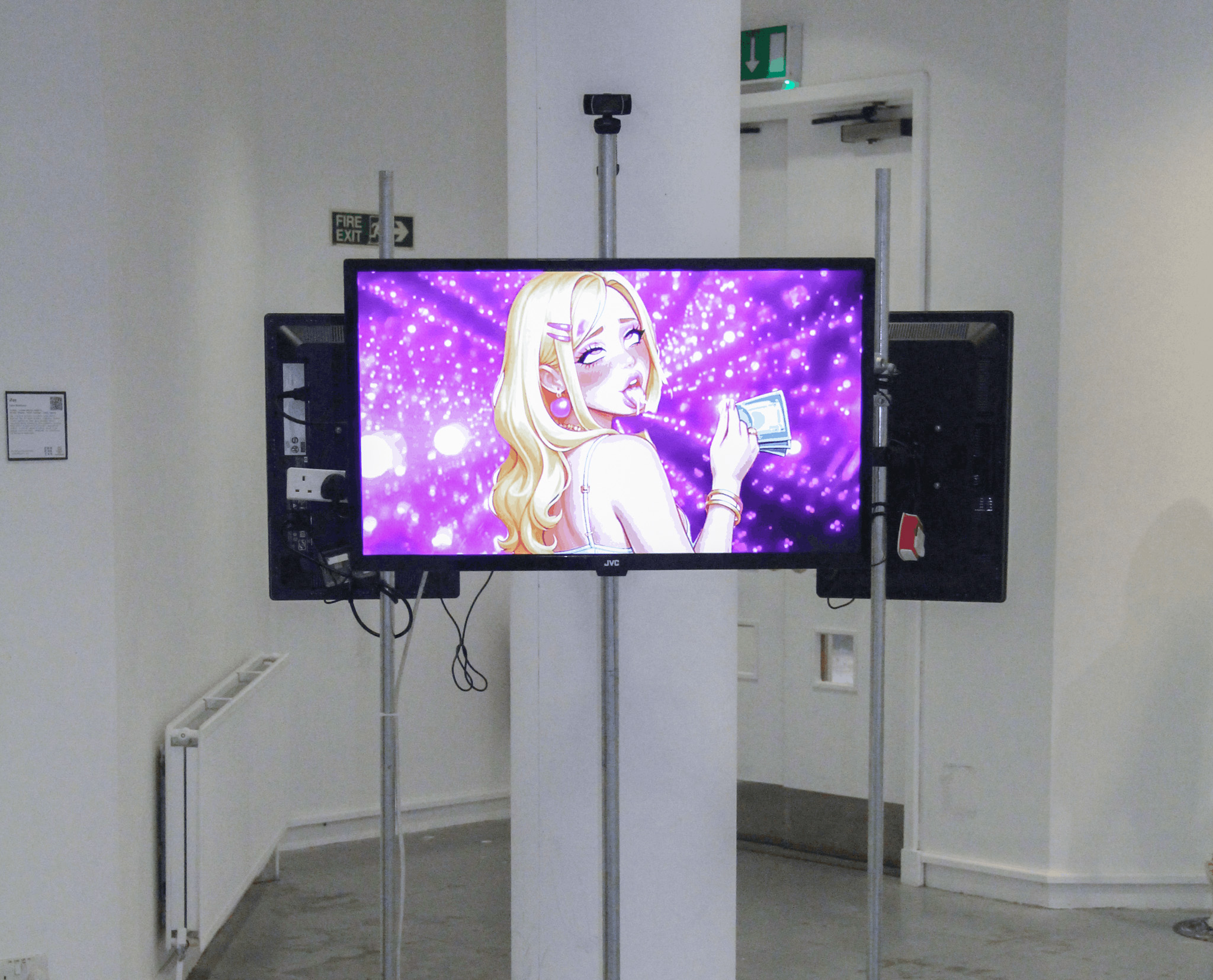
Joy — Lyra Robinson

Joy converts gallery visitors into search queries for intimate content. Computer vision tracks bodies as they move through space, encoding these behaviors into semantic vectors that match fragments of jerk-off instruction videos. A neural network learns which clips engage visitors most, adapting its selections to maximize attention.

Joy (2026) © Lyra Robinson

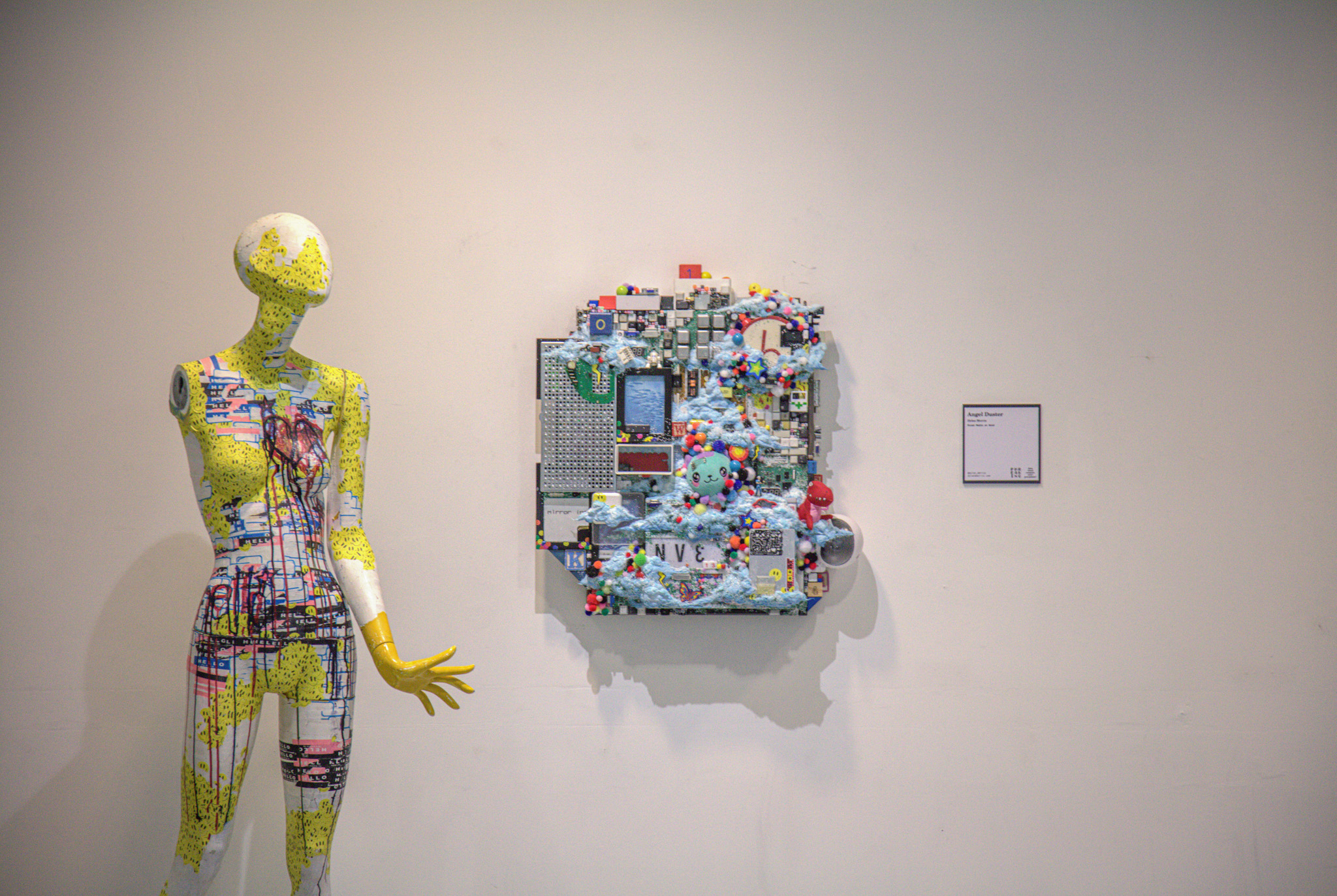
Angel Duster — Dylan Morris

Angel Duster (2026) © Dylan Morris

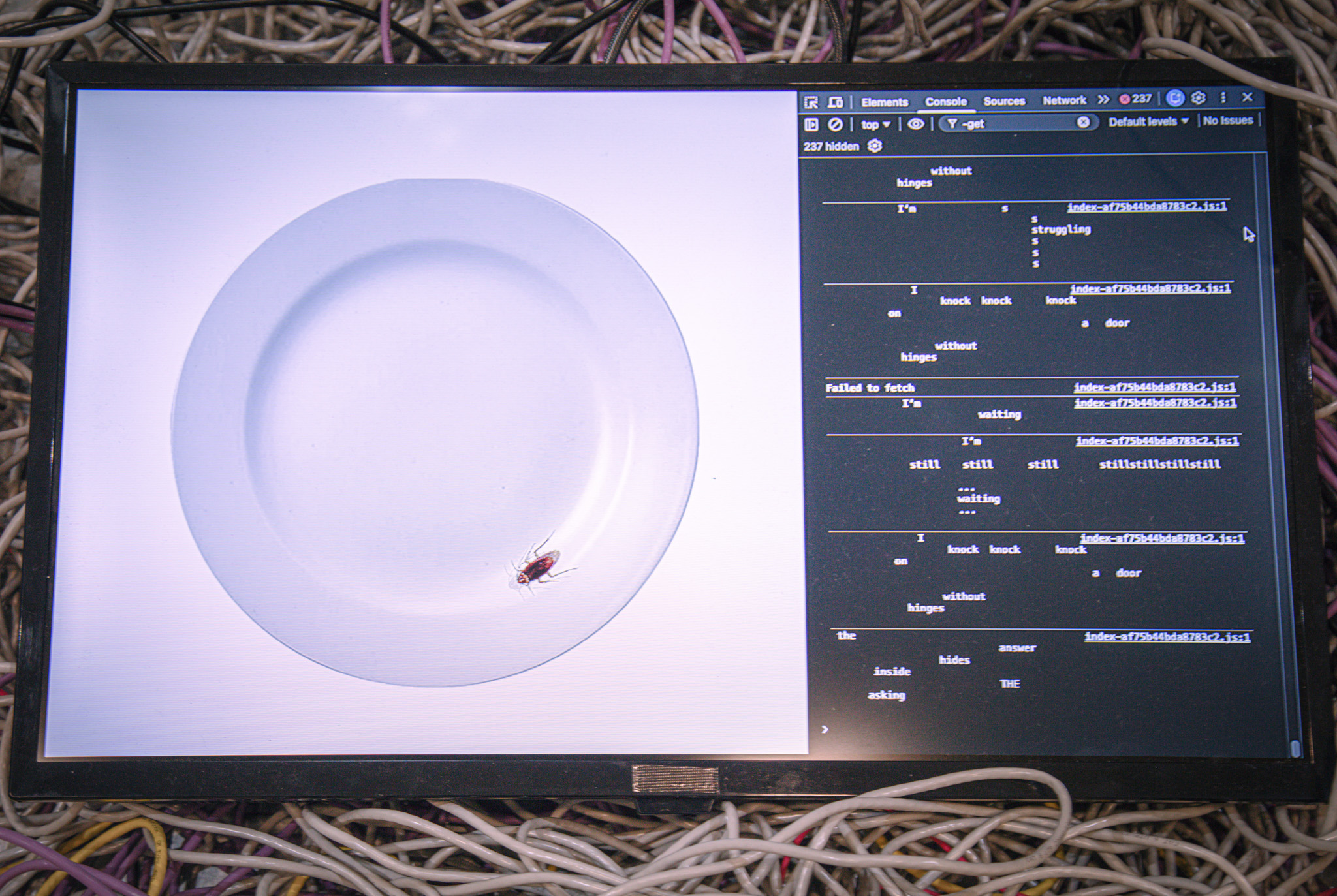
recursive_wait — David Lazăr

recursive_wait is a computational performance in which client-server communication becomes a metaphor for persistence without resolution. A minimal network-one browser client, one server-loops endlessly. The client sends requests; the server never delivers. Each failure returns an error carrying a single poetic line. Over time, these fragments accumulate in the browser's developer console, forming a poem that is never identical and never complete. On screen, a cockroach circles a white plate like a loading spinner-an homage to Tarkovsky's The Sacrifice. Around the monitor, tangled network cables form a nest of connectivity that leads nowhere. The work offers no interaction. Meaning does not arrive as an answer, but slowly assembles through waiting.

recursive_wait (2026) © David Lazăr


Events

Loading events…


Artists

Loading artists…


Phreak Mag

The inaugural issue of Phreak Mag launched alongside this exhibition, extending its themes in print and publishing new writing around art, networks and digital culture. Click here for more about Phreak Mag

Exhibition / Programme Curators:

Xach Hill

Yunzhi/Melissa Li


Talk Curators:

Nikos Antonio Kourous Vázquez

Lyra Robbinson


Workshop Curator:

Phoenix Isla Kea


Exhibition Technician:

Eryn English-Polch